An ensuing loss clause is an exception within an exclusion. It can preserve coverage when an excluded cause leads to a covered cause of loss that produces additional damage. It does not turn the excluded cause or defective work itself into covered damage.
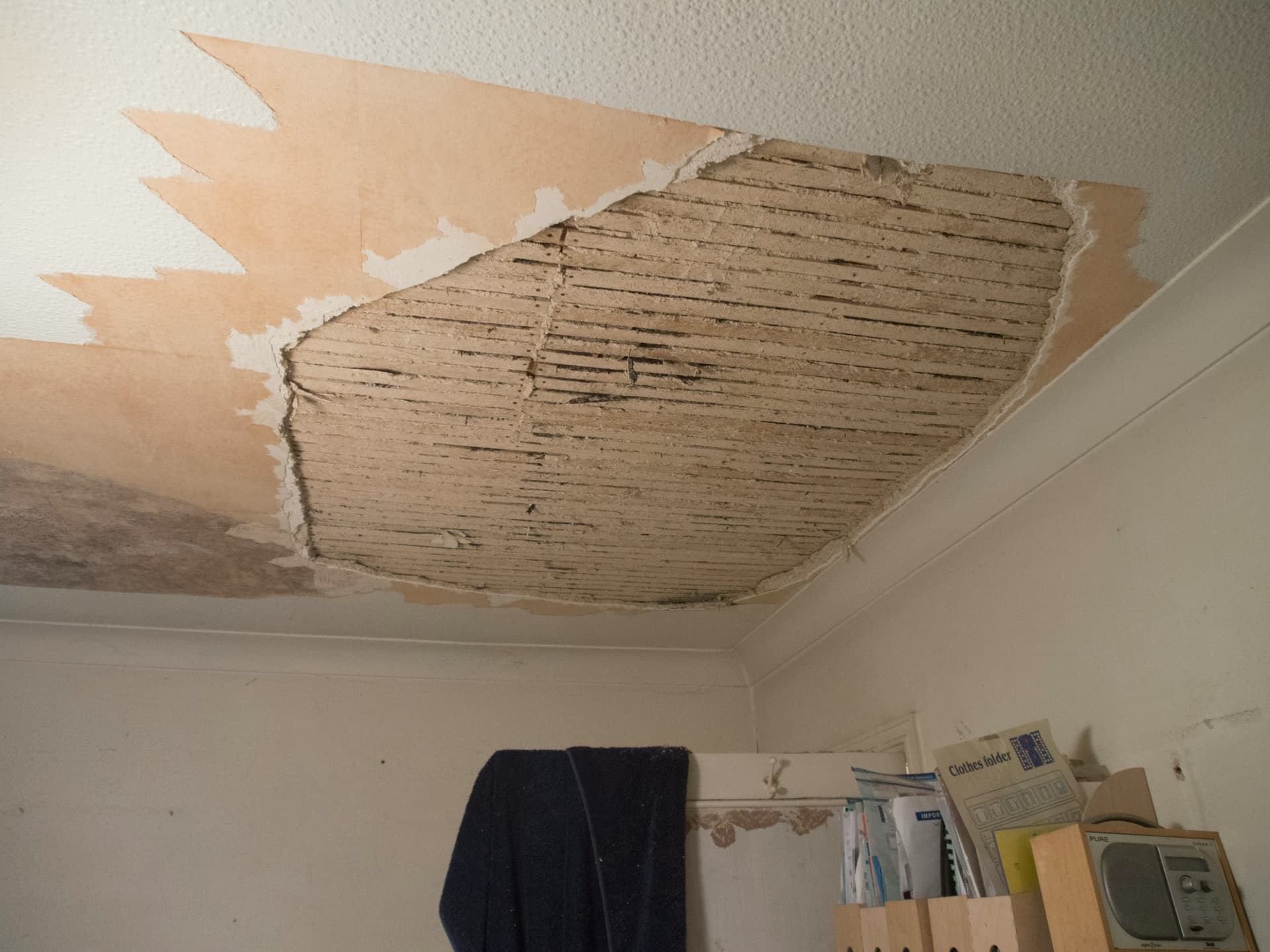
For example, faulty workmanship may allow water to enter a building. A policy may exclude the cost of correcting the faulty work while preserving coverage for the resulting water damage if water is a covered cause of loss. Whether that distinction works in a particular claim depends on the exact exception, the rest of the policy, the facts, and the governing law.
Policies may call this an “ensuing loss,” “resulting loss,” or “resultant loss.” Some name the specific peril that must follow; others refer more broadly to a covered cause of loss. Those differences matter, and courts do not apply every version the same way.
Where to find ensuing loss language
The exception usually appears at the end of a particular exclusion. It may not appear in the declarations or in a separate endorsement, and one exclusion may contain an exception while another does not. A word search for “ensuing” alone can therefore miss the controlling language.
The ISO Causes of Loss—Special Form, CP 10 30 09 17, illustrates two common structures:
- Named-peril exception. The earth-movement exclusion preserves coverage if the excluded event results in fire or explosion. The water exclusion similarly identifies fire, explosion, or sprinkler leakage. Coverage is restored only for the resulting damage caused by the listed peril.
- Covered-cause exception. Other exclusions, including the faulty-design and workmanship exclusion, preserve damage caused by a resulting Covered Cause of Loss. This wording is broader than a list limited to fire or explosion, but it still requires the resulting peril and damage to fit the policy’s coverage.
Homeowners forms often use language along the lines of “any ensuing loss … not precluded by any other provision.” That last phrase is important: an ensuing loss exception does not override every other exclusion, limitation, sublimit, or condition in the policy.
These examples describe familiar form language, not every current policy. Carrier forms and endorsements may change, narrow, relocate, or remove the exception. The form number and edition should be confirmed against the complete issued policy.
How the analysis works
A useful way to analyze the clause is to separate the chain into parts:
excluded cause → resulting covered peril → additional damage
That shorthand is only a starting point. The actual review should answer five questions:
- What does the exclusion remove? Identify the excluded cause and the damage within its scope.
- What does the exception restore? Determine whether it names a particular peril or refers to any covered cause of loss.
- What happened next? Identify the claimed resulting peril and the damage it caused. Damage is not itself always a separate “peril.”
- Does another provision apply? Check other exclusions, anti-concurrent causation language, limitations, sublimits, deductibles, and conditions.
- How does the governing jurisdiction read this wording? Courts differ over how separate the resulting peril and damage must be and whether a natural consequence of an excluded cause can qualify.
The repair scope should make the distinction visible. If faulty flashing allows rainwater into a building, the cost to replace the faulty flashing is different from the cost to remove and replace water-damaged insulation, drywall, and flooring. That physical and cost separation can be important, but it does not decide coverage by itself.
Residential water-damage example
Assume a homeowners policy excludes faulty workmanship and contains a broad ensuing loss exception. Flashing was installed incorrectly two years before a storm. Rain then entered through the defective area and damaged the attic, walls, ceilings, floors, and personal property. Mold later developed in wall cavities.
The claimed amount is $380,000:
- $12,000 to remove and reinstall the defective flashing;
- $285,000 for water-damaged building materials and personal property; and
- $83,000 for mold remediation.
The $12,000 correction of defective work may fall within the workmanship exclusion. The $285,000 in water damage may qualify as resulting loss if water is a covered cause of loss under the actual policy and the governing law treats it as the required resulting peril and separate damage.
The $83,000 mold amount cannot simply be added to the covered total. Mold or fungi provisions often contain a separate exclusion, limited coverage, sublimit, time requirement, or remediation condition. Those provisions must be applied independently.
The example therefore does not establish that the insurer owes $368,000. It shows how to separate the amounts that require different coverage analyses. The final payment would also depend on valuation, limits, deductibles, prior payments, and all other applicable terms.
Anti-concurrent causation and other causation rules
An anti-concurrent causation clause generally says that loss caused by a listed excluded peril is excluded even when another cause contributes concurrently or in sequence. An ensuing loss exception may appear inside or immediately after an exclusion that uses this language. When it does, the exception must be read together with the exclusion rather than treated as if either provision automatically erases the other.
The ISO-style earth-movement example is straightforward: although the exclusion uses anti-concurrent causation language, it expressly preserves the resulting fire or explosion damage it identifies. Broader exceptions create harder questions, especially when the excluded event and resulting covered peril are close in time or description.
Three concepts should remain distinct:
- Ensuing loss is a contractual exception addressing loss that follows from an excluded cause.
- Concurrent causation addresses multiple causes contributing to the same loss. Some jurisdictions apply a concurrent-cause rule when independent covered and excluded causes combine.
- Efficient proximate cause is a jurisdiction-specific doctrine for identifying the predominant or initiating cause in a causal chain. An enforceable anti-concurrent causation clause may alter that analysis, depending on state law.
Sebo v. American Home Assurance Co. is a concurrent-cause decision, not a direct interpretation of an ensuing loss exception. The Florida Supreme Court applied the concurrent-cause doctrine where covered rain and wind combined with excluded construction defects and the relevant exclusion did not contain anti-concurrent causation language. It should not be cited as a nationwide rule about resulting-loss clauses.
What the cases show
The cases are best read as examples of how specific language and facts produce different results, not as a reliable list of universally “broad” or “narrow” states.
Washington: a distinct peril and separate damage, but no independence requirement
In Gardens Condominium v. Farmers Insurance Exchange, 544 P.3d 499 (Wash. 2024), faulty roof design and repair caused inadequate ventilation. Water vapor and condensation allegedly damaged other roof components. The Washington Supreme Court held that the resulting-loss exception could preserve coverage even if the covered peril was a natural consequence of the faulty workmanship; the policy did not require the peril to be independent or unforeseeable.
The holding was not that every consequence of faulty work is covered. The court described the required showing as damage beyond the defectively constructed element caused by a new and distinct covered peril. It remanded rather than deciding that condensation and water vapor were covered perils on the record before it.
District of Columbia: covered water damage followed excluded conditions
In 3534 East Cap Venture, LLC v. Westchester Fire Insurance Co., 104 F.4th 913 (D.C. Cir. 2024), a builders-risk policy excluded atmospheric dampness and temperature changes but insured water damage and preserved loss by an insured peril that ensued. Moisture condensed into liquid water that damaged wood, insulation, and drywall. Applying District of Columbia law, the court held that the ensuing-loss exception covered the water damage even if the excluded dampness and temperature changes caused it.
The decision turned on the policy’s express treatment of water damage as an insured peril. It does not mean any moisture-related loss qualifies under every policy.
Arkansas law as predicted by the Eighth Circuit: no second peril
In Bob Robison Commercial Flooring, Inc. v. RLI Insurance Co., 131 F.4th 832 (8th Cir. 2025), a subcontractor painted crooked and incorrect lines on a vinyl gym floor. The paint could not be removed, so the floor had to be replaced. The court, predicting Arkansas law, held that faulty painting was the sole cause and occurred at the same time as the damage. Because the insured identified no separate covered peril, the exception did not restore coverage.
That decision should not be shortened to “the Eighth Circuit always requires independence.” The court applied Arkansas law to one policy and distinguished water-damage cases in which a covered peril followed the defect.
California and Arizona: different wording, different outcomes
In Acme Galvanizing Co. v. Fireman’s Fund Insurance Co., 221 Cal. App. 3d 170 (1990), a defective kettle ruptured and spilled molten zinc. The California court found no separate peril beyond the excluded defect and rupture. It explained that a later fire or explosion would have presented a different analysis.
In Roberts v. State Farm Fire & Casualty Co., 705 P.2d 1335 (Ariz. 1985), bees built a hive in an attic. After extermination, honey leaked into the dining room. The Arizona Supreme Court held that the honey seepage fell within the policy’s ensuing-loss wording unless another exclusion applied and remanded the case.
The contrast does not support a simple state ranking. The policies, perils, timing, and claimed damage differed.
In Kesling v. American Family Mutual Insurance Co., 861 F. Supp. 2d 1274 (D. Colo. 2012), the court found the phrase “any resulting loss” ambiguous and construed it against the insurer, allowing the separate water-damage claim to proceed beyond the defective construction itself. The case was a federal trial-court application of Colorado law, not a controlling Colorado Supreme Court decision. In Wagner v. American Family Mutual Insurance Co., 569 F. App’x 574 (10th Cir. 2014), the Tenth Circuit also cautioned that invoking the exception does not end the analysis; another exclusion may still bar the loss.
Common claim patterns
These patterns can raise an ensuing loss issue, but none establishes coverage without the policy and facts:
- Faulty workmanship followed by water damage. Separate the cost to correct the defect from damage caused by rain, escaped water, or another potentially covered peril. Confirm how the policy treats repeated leakage, interior rain, mold, and defective property.
- Earth movement followed by fire or explosion. Some forms expressly preserve the resulting fire or explosion damage even though earth movement remains excluded.
- Wear and tear followed by accidental water discharge. The worn part may remain excluded while water damage may be covered. The exception may contain tear-out coverage or other limits that need separate treatment.
- Insect activity followed by different property damage. Roberts illustrates how later honey seepage was analyzed separately from the bee infestation and hive removal.
- Latent defect or mechanical breakdown followed by fire, collapse, or other damage. Identify the later peril and damage instead of relabeling the cost of fixing the defective component.
How to review an exclusion-based coverage position
Start with the complete exclusion, including its final sentences. A coverage letter that quotes only the excluded cause may not address an exception printed in the same provision. The next step is to compare the letter with the actual causal sequence and each category of damage.
A reliable review should include:
- the issued policy, form schedule, and endorsements;
- the full exclusion and exception, with page citations;
- a timeline showing the excluded event, any later peril, discovery, and mitigation;
- photographs, testing, weather records, inspection notes, and expert opinions bearing on causation;
- a scope and estimate that separate correction of the defect from resulting damage; and
- a check of all other exclusions, limitations, sublimits, and coverage conditions.
Avoid assuming that foreseeable damage cannot ensue or that any later damage automatically qualifies. Both positions add a rule that may not appear in the policy. The better question is what the clause requires and whether the evidence establishes each part.
FAQ
Does an ensuing loss clause create coverage?
No. It is an exception to an exclusion. It preserves coverage that the policy otherwise provides for the resulting peril and damage; it does not add a new insured peril, increase a limit, or cover the excluded defect itself.
Must the ensuing loss be separate from the excluded damage?
Often, but the required degree of separation depends on the wording and jurisdiction. Some courts require a distinct covered peril and separate damage. Others reject an extra requirement that the covered peril be independent, unexpected, or unforeseeable. Even under the latter approach, merely giving the excluded damage a different label is generally not enough.
Does the damage have to affect different property?
Not always. Damage to property beyond the defective component is strong evidence of a separate loss, but some clauses and cases focus on the peril and kind of damage rather than ownership or a strict “other property” rule. Read the actual holding and policy language.
Can anti-concurrent causation language override the exception?
There is no universal answer. An express exception within an anti-concurrent causation exclusion ordinarily must be given some effect, but its scope and its interaction with other exclusions depend on the policy and state law.
Who must prove that the exception applies?
Burden rules vary. In open-perils coverage, the policyholder generally begins by showing a covered direct physical loss, and the insurer generally bears the burden of proving an exclusion. The burden associated with an exception to an exclusion differs by jurisdiction and procedural posture. Evidence of the resulting peril and damage is important regardless of formal burden allocation.
Is mold automatically covered when it follows covered water damage?
No. Mold, fungi, wet rot, and bacteria commonly have their own exclusions, limited coverage, sublimits, and conditions. Apply those provisions separately.
For Policyholder Representatives
When an insurer relies on an exclusion, obtain the complete policy and quote the exception with the exclusion rather than arguing from a summary. Build the coverage position around evidence: identify the excluded cause, name the resulting peril, show what damage it caused, and separate the repair costs.
Do not promise that all downstream damage is recoverable. Other exclusions and limitations may still apply, and jurisdiction-specific causation law may change the result. Coverage counsel should review disputed policy interpretation, governing-law questions, and deadline issues.
Claim Intake Checklist for Policyholder Representatives
| # | Question | Why it matters |
|---|---|---|
| 1 | Is the complete issued policy available, including the form schedule and endorsements? | An endorsement may change or remove the exception. |
| 2 | Which exact exclusion is being considered or cited? | The exception must be read with the specific exclusion. |
| 3 | Does that exclusion contain a named-peril or covered-cause exception? | The wording defines what can be restored. |
| 4 | What is the excluded cause or defective component? | It establishes the part of the claim that may remain excluded. |
| 5 | What covered peril allegedly followed? | Later damage alone is not always a separate peril. |
| 6 | What damage did that peril cause? | The scope should connect damage to the resulting peril. |
| 7 | Can correction of the defect and resulting damage be scoped and priced separately? | Separation clarifies both causation and the claimed amount. |
| 8 | Do other exclusions or limitations apply to water, mold, collapse, repeated leakage, or interior rain? | An ensuing loss must still survive the rest of the policy. |
| 9 | Does anti-concurrent causation language apply, and where is the exception located? | Placement and wording affect how the provisions interact. |
| 10 | What jurisdiction and law govern? | Courts differ on separateness, causation, and burdens of proof. |
| 11 | Are expert support, notice, mitigation, proof-of-loss, or suit deadlines at issue? | Evidence and procedural requirements can determine the outcome. |
Ensuing loss and Frontera
Frontera’s Coverage Analysis can help locate relevant exclusions, resulting-loss exceptions, and endorsements and link the findings to source policy pages. That gives the reviewer a faster way to compare the complete wording instead of relying on an isolated exclusion or generic form.
Frontera’s Estimating tools can organize site evidence and separate the cost to correct defective work from damage attributed to a later peril. They do not decide causation, governing law, or whether a court will apply an exception. Those judgments remain with the qualified professionals handling the claim.
References
- ISO CP 10 30 09 17, Causes of Loss—Special Form
- ISO HO 00 03, Homeowners 3—Special Form
- Gardens Condominium v. Farmers Insurance Exchange, 544 P.3d 499 (Wash. 2024)
- 3534 East Cap Venture, LLC v. Westchester Fire Insurance Co., 104 F.4th 913 (D.C. Cir. 2024)
- Bob Robison Commercial Flooring, Inc. v. RLI Insurance Co., 131 F.4th 832 (8th Cir. 2025)
- Roberts v. State Farm Fire & Casualty Co., 705 P.2d 1335 (Ariz. 1985)
- Acme Galvanizing Co. v. Fireman’s Fund Insurance Co., 221 Cal. App. 3d 170 (1990)
- Sebo v. American Home Assurance Co., 208 So. 3d 694 (Fla. 2016)
- Kesling v. American Family Mutual Insurance Co., 861 F. Supp. 2d 1274 (D. Colo. 2012)
- Wagner v. American Family Mutual Insurance Co., 569 F. App’x 574 (10th Cir. 2014)
- Christopher C. French, “The ‘Ensuing Loss’ Clause in Insurance Policies,” 13 Nevada Law Journal 215 (2012)
This article is for educational purposes and does not constitute legal advice. Consult coverage counsel on specific claims and disputed policy interpretations.