Note: This guide uses standard ISO commercial-property and homeowners forms as examples. Issued policies, state amendments, proprietary forms, and later editions may differ.
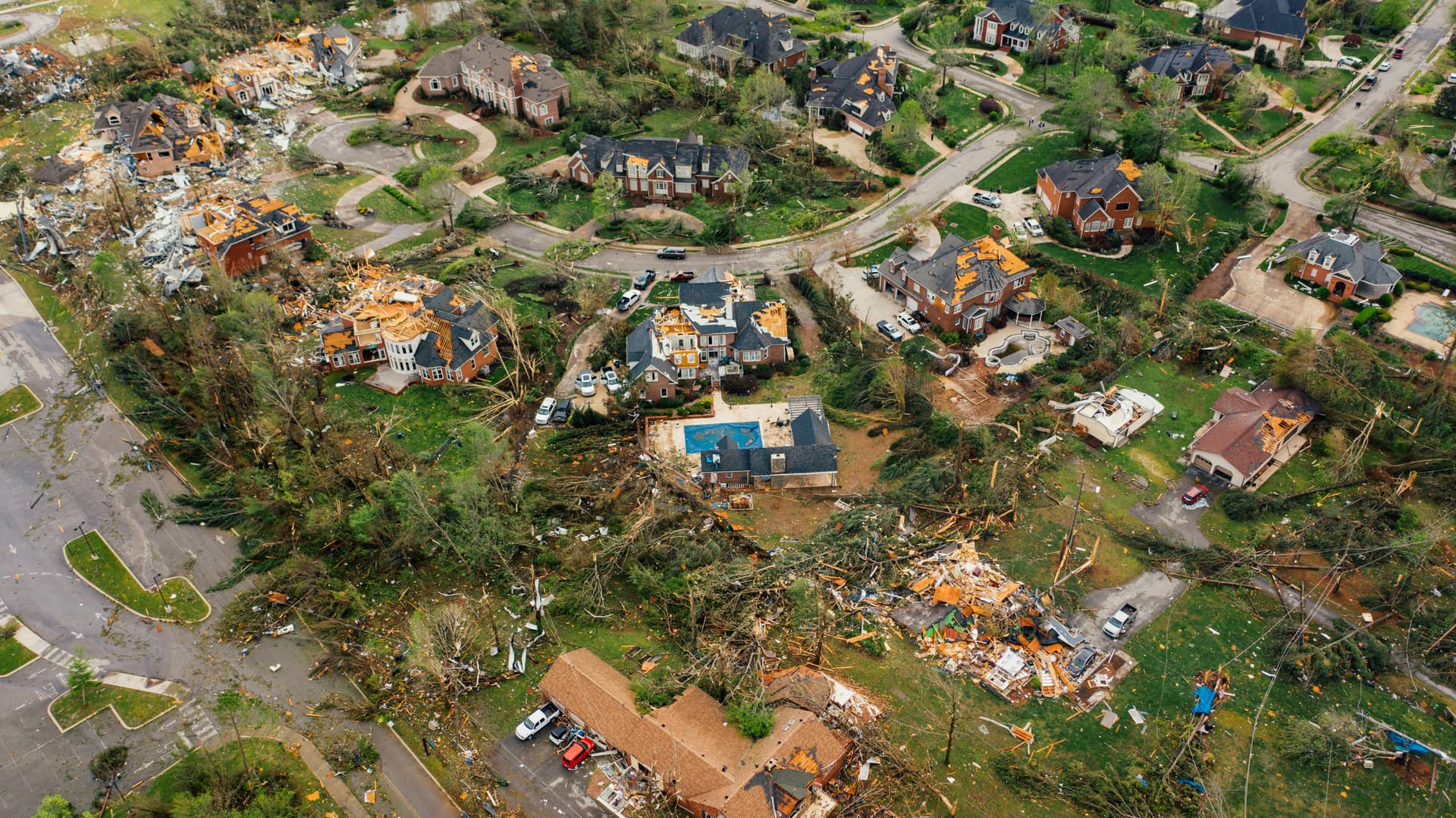
Debris removal coverage pays certain cleanup and disposal expenses after a covered loss. Coverage depends on what created the debris, what is being removed, where it is located, and which limit applies. The policy may also impose a reporting deadline or provide an additional amount above the property limit.
The standard commercial-property and homeowners forms use different calculations. Under ISO CP 00 10, the basic debris-removal payment is limited by both the applicable property limit and a 25% formula, with a possible additional amount. Under the standard HO-3, debris removal is generally included within the limit for the damaged property, with an additional 5% available only when the damage payment plus debris-removal expense exceeds that limit.
What debris removal coverage does
Debris removal is usually presented as an Additional Coverage, but “additional” does not necessarily mean that the entire expense sits above the property limit. In both standard commercial-property and homeowners examples, at least part of the debris-removal expense can share the limit that applies to the damaged property.
Coverage also depends on what is being removed and why it became debris. Common questions include:
- Did a covered cause of loss produce the debris?
- Is the debris on the premises identified in the policy?
- Is it debris of covered property, or does a provision for other property apply?
- Does the work remove existing debris, dismantle damaged property, demolish an undamaged portion, or remediate land or water?
- Was the expense reported in the manner and within the time required by the policy?
Those distinctions affect the applicable limit and may determine whether the cost belongs under debris removal, direct physical damage, Ordinance or Law, pollutant cleanup, or another provision.
Commercial-property coverage under CP 00 10
The debris-removal provision in the reviewed ISO CP 00 10 10 12 form has several parts that must be applied together.
Covered expense and written reporting
Subject to its exclusions and limitations, the form covers the insured’s expense to remove debris of Covered Property and certain other debris from the described premises when a Covered Cause of Loss during the policy period caused the debris.
The form requires the expense to be reported to the insurer in writing within 180 days of the direct physical loss or damage. That is not the same as saying every policy has a 180-day deadline. State amendments and proprietary forms may use another period or trigger. It also does not establish that a contractor’s estimate always satisfies the condition. The safest approach is to provide written notice of the expected categories and amounts, update the insurer as costs develop, and retain proof of delivery.
The basic 25% calculation
The standard form limits the basic debris-removal payment in two ways:
- Direct physical loss payment plus basic debris-removal payment cannot exceed the applicable Limit of Insurance for the damaged Covered Property.
- Subject to that limit, the basic debris-removal payment cannot exceed 25% of the deductible plus the amount the insurer pays for direct physical loss or damage to that property.
The formula for the second limitation is:
Basic 25% amount = (direct physical loss payment + applicable deductible) × 25%
That figure is a ceiling, not an automatic payment. The recoverable amount remains subject to the actual covered expense and the property limit.
The formula uses the amount the insurer pays for direct physical loss. A coinsurance adjustment can therefore reduce the basic debris-removal amount indirectly. The form’s own examples assume no coinsurance penalty; an actual claim should not do so without checking.
The additional $25,000
In the 10 12 edition reviewed here, up to an additional $25,000 per location in one occurrence may become available when either:
- actual debris-removal expense plus the direct physical loss payment exceeds the limit on the damaged Covered Property; or
- actual debris-removal expense exceeds the basic 25% amount.
The second trigger matters. The additional amount can apply even when the property limit is nowhere near exhausted.
Even when triggered, the additional amount is not automatically paid in full. The total debris-removal payment cannot exceed actual covered expense. The overall payment for direct physical damage and debris removal also cannot exceed the applicable property limit plus $25,000 under these editions.
Endorsement CP 04 15 can replace the built-in additional amount with the amount shown in its schedule. Confirm the endorsement wording rather than assuming it creates an unlimited increase.
Form edition matters
The 06 07 edition used a $10,000 additional amount. ISO increased it to $25,000 in the 10 12 edition, which also broadened certain coverage for debris of property owned by others.
The issued policy controls. It may use an older ISO edition, a newer filing, a state-specific amendment, or carrier language that changes the amount, deadline, eligible property, or location basis.
Commercial-property examples
These examples assume no coinsurance penalty and no endorsement changing the standard CP 00 10 10 12 terms.
Partial loss where the additional amount matters
Assume:
- Limit of Insurance: $500,000
- Direct physical loss before deductible: $50,000
- Deductible: $2,500
- Direct physical loss payment: $47,500
- Actual covered debris-removal expense: $18,000
The basic 25% amount is:
($47,500 + $2,500) × 25% = $12,500
Because the $18,000 actual expense exceeds $12,500, the additional-amount provision is triggered even though the $500,000 property limit is not close to being exhausted. The additional amount can cover the remaining $5,500, so the full $18,000 debris-removal expense may be payable, subject to all other terms.
Large loss with an uncovered remainder
Assume:
- Limit of Insurance: $500,000
- Direct physical loss before deductible: $400,000
- Deductible: $2,500
- Direct physical loss payment: $397,500
- Actual covered debris-removal expense: $130,000
The basic 25% amount is:
($397,500 + $2,500) × 25% = $100,000
Because the actual debris-removal expense exceeds that amount, up to $25,000 in additional debris-removal coverage is available. The maximum debris-removal payment is therefore $125,000, leaving $5,000 of the $130,000 expense unpaid. The total insurer payment is $397,500 + $125,000 = $522,500, which remains below the $525,000 outer ceiling of the $500,000 property limit plus $25,000.
The $2,500 deductible remains the insured’s responsibility. Separating the pre-deductible loss, the insurer’s property payment, and the debris-removal expense avoids double-counting the deductible.
Homeowners coverage
The ISO HO 00 03 05 11 form pays reasonable expense to remove debris of covered property when a Peril Insured Against that applies to the damaged property caused the loss. It also addresses certain volcanic ash, dust, or particles.
The expense is included within the limit that applies to the damaged property. If the amount payable for the property damage plus debris removal exceeds that limit, an additional 5% of the applicable limit is available for debris-removal expense.
Assume a dwelling has a $400,000 Coverage A limit, covered direct damage consumes the full limit, and covered debris removal costs $115,000. The additional 5% is:
$400,000 × 5% = $20,000
Under those assumptions, the debris-removal payment is $20,000 and the remaining debris expense is $95,000. This example isolates the debris-removal provision and does not account for a deductible, extended or guaranteed replacement-cost coverage, increased limits, ordinance-or-law coverage, or a state-specific catastrophe rule.
Fallen trees
The 05 11 HO-3 also contains separate tree-removal coverage of up to $1,000 in one loss and no more than $500 for one tree. It applies to the insured’s trees felled by windstorm, hail, or weight of ice, snow, or sleet, and to a neighbor’s trees felled by a Coverage C peril, if the tree damages a covered structure or meets a specified access-blocking condition. The access condition addresses a driveway needed by a registered motor vehicle or a ramp or fixture designed to assist a person with a disability.
This separate limit should not be reduced to “all storm tree removal.” A tree lying harmlessly in the yard may not meet the stated trigger, and proprietary or state-specific forms can differ.
Demolition, dismantling, and Ordinance or Law
“Debris removal” does not answer every question about tearing down damaged material. Courts have reached different results based on the wording and structure of the policies before them.
In Annal Management Co. v. Travelers Excess & Surplus Lines Co., a fire damaged a multi-story building. The insurer treated the expense of carting away material as debris removal but disputed costs to detach and dismantle parts of the damaged structure. Applying New York law to that policy, the federal court held that removing debris included the necessary teardown work and granted summary judgment to the insured.
In Zurich American Insurance Co. v. Keating Building Corp., a New Jersey federal court interpreted different policy language after a parking-garage collapse. It held that demolition, planning, and engineering were distinct from debris removal and therefore were not subject to the debris-removal sublimit. The result was not a general holding that demolition is uncovered; it concerned which policy provision and sublimit governed those costs.
These decisions should not be treated as competing nationwide rules. The policy wording, how the estimate divides the work, and governing law all matter.
Ordinance or Law Coverage B under CP 04 05 presents a separate issue. It can cover the cost to demolish and clear the site of an undamaged portion of a covered building when enforcement of an ordinance or law requires demolition. Debris removal may address damaged property, while Coverage B may address the code-required demolition and site clearing of an undamaged portion. The actual endorsement, limits, and anti-duplication language control.
Pollutants and hazardous materials
Standard CP 00 10 debris-removal language does not cover the cost to extract pollutants from land or water or to remove, restore, or replace polluted land or water. It also excludes removal of deposits of mud or earth from the grounds.
The form separately provides Pollutant Clean-up and Removal coverage for certain expense to extract pollutants from land or water at the described premises when a covered cause of loss produces the discharge or release. In the 10 12 specimen, that coverage has a $10,000 aggregate limit at each described premises for covered expenses arising during each separate 12-month policy period, with its own written-reporting condition.
Hazardous material in building debris does not automatically become a $10,000 land-or-water pollutant-cleanup claim. Asbestos-containing roofing, lead-painted components, contaminated soil, and water remediation can implicate different policy provisions, exclusions, endorsements, and legal requirements. The estimate should separate testing, abatement, dismantling, transportation, disposal, land or water extraction, and code-driven work so each item can be evaluated under the correct language.
Debris owned by someone else
The 10 12 CP 00 10 specimen covers certain “other debris” on the described premises, but it also excludes several categories. Among other things, the provision excludes property of others of a type that would not qualify as Covered Property under the form and property owned by or leased to the landlord unless the insured has a contractual duty to insure it and it is insured under the policy.
If no Covered Property sustained direct physical loss or damage, the standard form caps covered removal of debris of other property at $5,000 per location. If Covered Property was damaged, the ordinary property-limit, 25%, and additional-amount rules apply, but that does not make every item of third-party debris eligible. Identify the owner and property type before calculating the limit.
Wildfire and government removal programs
Wildfire cleanup can involve hazardous-material surveys, foundation or ash removal, transportation, disposal, and government cost-recovery rules. In a 2018 fact sheet, the California Department of Insurance reported that debris removal after the Valley and Butte fires averaged about $115,000 per property. That historical figure is not a universal present-day price benchmark, but it shows why a 5% homeowners amount can be inadequate after a total loss.
Government programs are event- and jurisdiction-specific. A Right of Entry or similar agreement may authorize public cleanup and may assign or seek reimbursement from a debris-removal benefit. Other policy proceeds may be protected for rebuilding under the program’s rules. Before allocating any payment, review the current program documents, the policy, the actual cleanup cost, and applicable insurance-department guidance.
Form reference table
| Form | Edition | Point to verify |
|---|---|---|
| CP 00 10 | 10 12 | Same principal mechanics discussed above; expanded treatment of certain other debris |
| CP 00 10 | 06 07 | Earlier edition with a $10,000 additional amount |
| CP 04 15 | 10 12 | Scheduled Debris Removal Additional Limit of Insurance |
| CP 04 05 | 10 12 | Ordinance or Law Coverage B for demolition and site clearing of an undamaged portion, subject to the endorsement |
| HO 00 03 | 05 11 | Debris-removal expense within the damaged-property limit; additional 5% when the stated condition is met; separate fallen-tree terms |
This table is a reading aid, not a substitute for the issued declarations, coverage form, endorsements, and state amendments.
FAQ
Is debris removal always additional to the property limit?
No. In the standard forms discussed here, the basic expense generally shares the limit that applies to the damaged property. A specified additional amount may become available only when its conditions are met.
Does CP 00 10 provide 25% of the policy limit for debris removal?
No. The basic formula is generally 25% of the direct physical loss payment plus the applicable deductible, subject to the actual covered expense and the applicable property limit. It is not 25% of the policy limit.
Must the commercial-property limit be exhausted before the additional $25,000 can apply?
No under the 10 12 specimen reviewed here. The additional amount can also be triggered when actual debris-removal expense exceeds the basic 25% amount.
Does a contractor estimate automatically satisfy the 180-day condition?
The standard CP 00 10 language requires covered expense to be reported in writing within 180 days. Whether a particular estimate is sufficient depends on its contents, delivery, the issued form, and governing law. Provide clear written notice and do not rely on an assumed rule.
Is demolition the same as debris removal?
Not always. The answer can affect whether a debris-removal sublimit, direct-damage coverage, or Ordinance or Law Coverage B applies. The estimate and policy should separate dismantling damaged material, demolishing an undamaged portion, hauling, disposal, and code-driven work.
What did Monette v. Citation Insurance Co. decide?
The Massachusetts Superior Court allowed summary judgment for the insurer on August 24, 2023, in a dispute over using estimated debris-removal cost when setting a homeowners Coverage A limit and premium. It was not a post-loss calculation of the amount payable for debris removal. Its holding should not be expanded beyond its policy, record, and Massachusetts consumer-protection claim.
For Policyholder Representatives
Debris removal should be evaluated early because the estimate may affect site access, reconstruction sequencing, use of the property limit, and government-program decisions. Preserve the original scope and pricing rather than presenting one undifferentiated “cleanup” number.
Claim Intake Checklist for Policyholder Representatives
| # | Question | Why it matters |
|---|---|---|
| 1 | What coverage form, edition, state amendment, and proprietary debris-removal provision apply? | The percentage, additional amount, deadline, and eligible debris may differ from the ISO examples. |
| 2 | Which property limit applies to each damaged item or category? | The basic expense can share that limit, and blanket and scheduled limits can produce different calculations. |
| 3 | What is the direct physical loss before deductible, what will the insurer pay, and is coinsurance involved? | CP 00 10’s 25% calculation uses the insurer’s loss payment plus the applicable deductible. |
| 4 | Does actual debris-removal expense exceed the basic percentage amount or cause the total to exceed the property limit? | Either condition may trigger the additional amount in the 10 12 specimen reviewed here. |
| 5 | Is CP 04 15 or another increased debris-removal endorsement attached? | The scheduled amount may replace the built-in additional limit. |
| 6 | Has the expected expense been reported clearly in writing within the policy’s deadline? | CP 00 10 commonly uses 180 days, but the issued form controls. Keep proof of delivery and updates. |
| 7 | Does the scope distinguish dismantling, demolition, hauling, disposal, testing, abatement, and land or water remediation? | Different work may fall under different provisions, exclusions, and limits. |
| 8 | Does Ordinance or Law Coverage B apply to an undamaged portion that must be demolished? | It may provide separate capacity for code-required demolition and site clearing. |
| 9 | Is any debris owned by someone else, owned by a landlord, or of a type that would not be Covered Property? | Eligibility and the $5,000 no-covered-damage cap depend on ownership, property type, and physical damage. |
| 10 | Is a government debris-removal program available, and has any Right of Entry or reimbursement agreement been signed? | Program terms may affect cleanup responsibility and use of insurance proceeds. |
| 11 | Are there endorsements or exclusions addressing asbestos, lead, pollutants, fungus, or contaminated soil or water? | Hazardous-material work cannot be assigned to the $10,000 pollutant-cleanup coverage by label alone. |
| 12 | Do invoices show quantity, equipment, labor, trucking, tipping fees, testing, permits, and disposal destination? | Detailed support allows each cost to be matched to the policy and tested for reasonableness without losing scope distinctions. |
Debris removal and Frontera
Frontera’s Coverage Analysis can help locate debris-removal provisions, reporting conditions, limits, coinsurance terms, related endorsements, and exclusions and link the findings to source policy pages. That gives the reviewer a faster way to assemble the inputs before applying the calculation.
Frontera’s Estimating tools can organize demolition, hauling, disposal, labor, equipment, quantities, and supporting evidence. They do not decide whether a particular material is covered debris, whether a deadline is enforceable, how a government program may recover costs, or which jurisdiction’s treatment of demolition controls.
References
- ISO CP 00 10 10 12, Building and Personal Property Coverage Form
- ISO CP 00 10 06 07, Building and Personal Property Coverage Form
- ISO CP 04 15 10 12, Debris Removal Additional Insurance
- ISO CP 04 05 10 12, Ordinance or Law Coverage
- ISO HO 00 03 05 11, Homeowners 3 — Special Form
- Annal Management Co. v. Travelers Excess & Surplus Lines Co., 488 F. Supp. 3d 80 (S.D.N.Y. 2020)
- Zurich American Insurance Co. v. Keating Building Corp., 513 F. Supp. 2d 55 (D.N.J. 2007)
- Monette v. Citation Insurance Co., No. 2084CV02626-BLS1 (Mass. Super. Ct. Aug. 24, 2023)
- California Department of Insurance, November 2018 Wildfires Consolidated Debris Removal Program Fact Sheet
This article is for educational purposes and does not constitute legal advice. Consult qualified coverage counsel about a specific policy, deadline, or dispute.